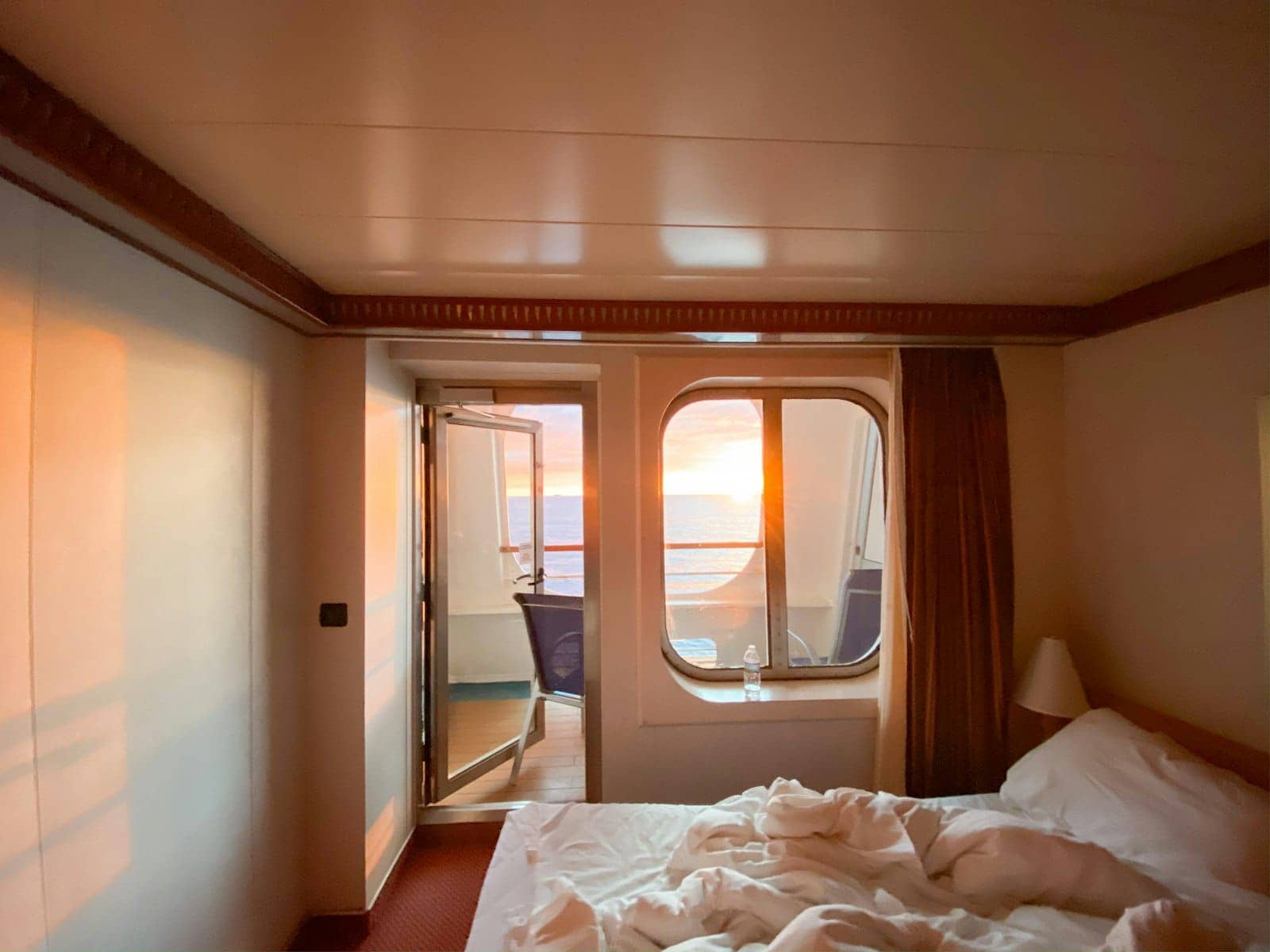
Start with how the room will be used
If you expect to spend most waking hours around the ship and ashore, an interior cabin may deserve consideration. If private outdoor time is central to the trip, a balcony may add meaningful value. A suite is useful when its space or confirmed benefits solve a real need, not simply because it is the highest category.
Count the people sharing the room and examine the actual sleeping arrangement. A capacity number does not tell you how comfortable the layout will feel once beds are in use.
Location is part of the category
Study the deck plan for nearby lifts, connecting doors, public spaces, and venues above or below. Consider the walking distance to places you will use regularly. Travelers sensitive to ship movement should discuss location preferences, while understanding that conditions and individual experiences vary.
A balcony can have an obstructed or unusual outlook. Confirm the category details rather than assuming every balcony on the ship is equivalent.
Distinguish a request from a confirmed choice
Some fares involve a category assignment rather than selecting a specific cabin. Understand what is guaranteed and what remains flexible. For connecting rooms or access needs, do not rely on an unconfirmed request if the arrangement is essential.
Tell Shealey what matters most: quiet, space, outdoor access, proximity, or budget. Compare the upgrade cost against the rest of the trip and choose the cabin that improves the hours you will actually spend there.
Put the decision into a real trip
Four travelers sharing one cabin may save on the fare while giving up privacy and usable floor space when extra beds are open. Two cabins can change the total but provide a different morning and bedtime routine. Compare the actual configuration, not just the maximum occupancy listed for the category.
A comparison you can take into planning
- Deck position: Identify public venues above, below, and beside the cabin.
- Sleeping layout: Check which beds are fixed and which convert or fold away.
- Outdoor space: Confirm balcony size, obstructions, and access details.
- Assignment: Distinguish a selected cabin number from a category that will be assigned later.
Turn the shortlist into a decision
Mark the facilities you will use most on the ship’s deck plan and trace the likely daily routes. Ask about your specific access needs before choosing a category. If a quiet location or connecting cabin is essential, make it a confirmed requirement rather than hoping an onboard change will solve it.
Bring these questions to your trip-planning conversation. Include the people, dates, and priorities that change the answer for your trip.