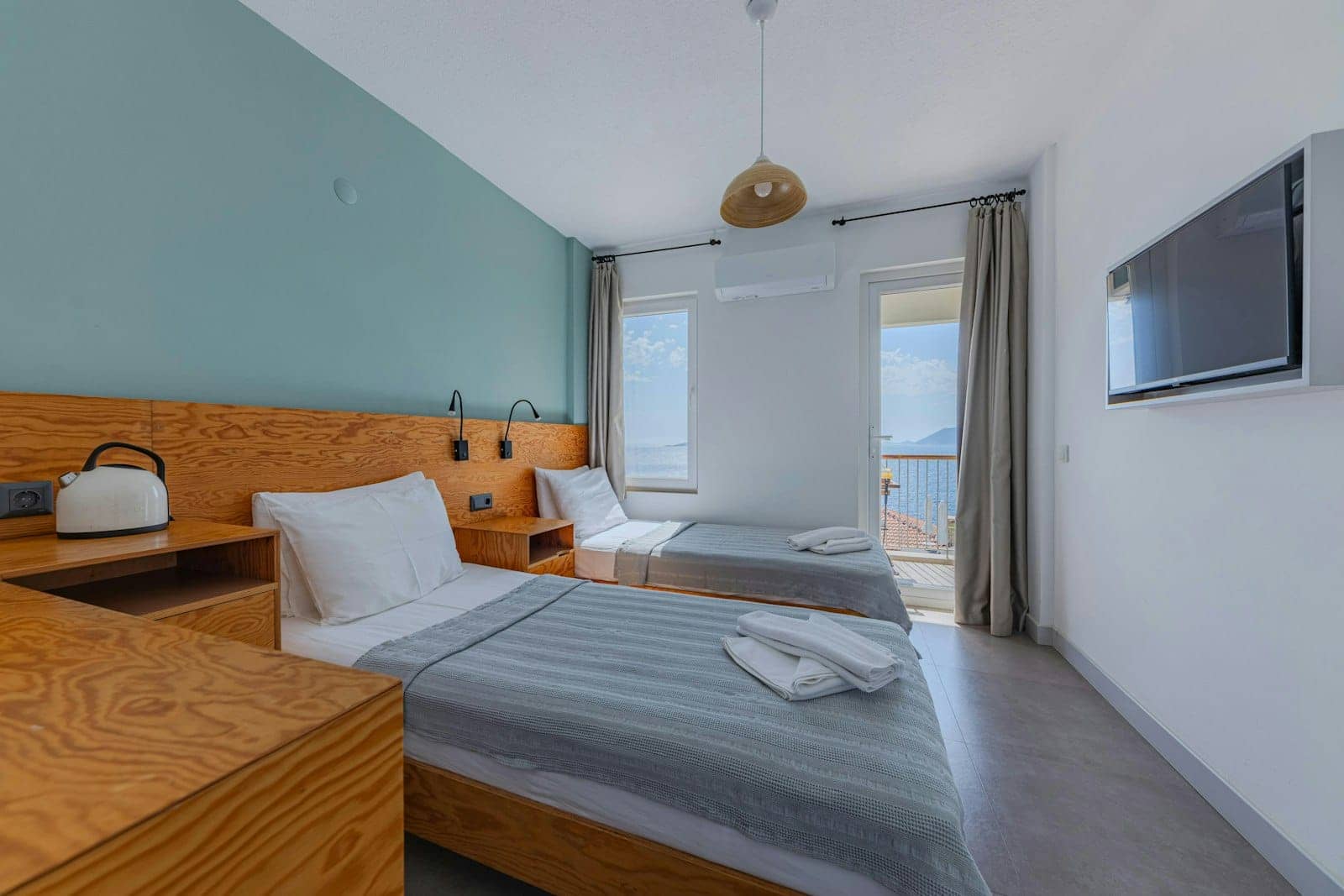
Start with how everyone needs to sleep
Count the travelers, their ages, and the privacy each person needs. Bed quantity is only one part of the decision. Consider bathrooms, doors between sleeping spaces, and whether adults need somewhere to sit after children are asleep.
A suite can mean many different layouts. Some have a separate bedroom; others are a larger open room. Review the floor plan or obtain a specific description rather than relying on the category name.
Connecting and adjacent are not interchangeable
Connecting rooms have an internal connection; adjacent rooms are simply near one another. If an internal door is essential, make that clear. Ask whether the arrangement is confirmed by the booked product or only recorded as a request.
For a larger family, compare occupancy rules and the booking requirements for each room. Do not assume a layout is suitable simply because the total number of beds appears sufficient.
Compare convenience with the whole cost
Two rooms may provide extra bathrooms and privacy. A suite may create a shared living area or a more convenient layout. Compare the total price, included benefits, and location within the property, not only the room labels.
Share your non-negotiable arrangement with Shealey before narrowing hotels. If a property cannot confirm the configuration you need, it may be better to change the shortlist than to build the vacation around a hopeful request.
Put the decision into a real trip
A family comparing a suite with two connecting rooms should draw the nighttime arrangement, not just compare the square footage. Where will everyone sleep, who needs a quiet space, and how many bathrooms are available? A large open-plan suite can offer less privacy than a smaller arrangement with a closing door.
A comparison you can take into planning
- Sleeping spaces: Identify fixed beds, sofa beds, and actual separation.
- Bathrooms: Consider morning routines and nighttime access.
- Confirmation: Ask whether connecting rooms are guaranteed or only requested.
- Cost: Compare the complete occupancy price and any category-specific benefits.
Turn the shortlist into a decision
If a connection is essential, make that clear before booking and obtain written confirmation of the arrangement. Adjoining rooms may simply be next to each other without an internal door. Use the property’s precise terminology and floor plan rather than assuming labels mean the same thing everywhere.
Bring these questions to your trip-planning conversation. Include the people, dates, and priorities that change the answer for your trip.